

Last Updated on October 23, 2024
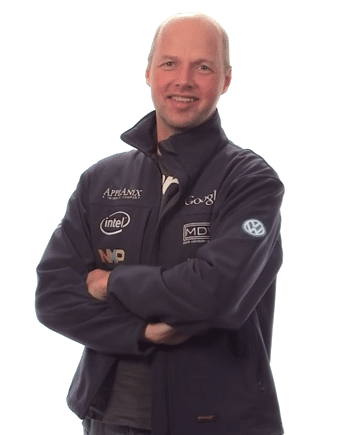
Sebastian Thrun introduces Runaway Robot projectThere’s a robot on the loose.
It’s turning in mindless circles somewhere in the desert. Your mission, should you choose to accept, is to retrieve this Runaway Robot.
The task won’t be easy: based only on the highly-unreliable sensor measurements of the runaway bot, you’ll have to write a program that figures out the runaway’s constantly-changing location and plans a path to intercept it.
Sound intriguing? This is a description of the final project we’ve added to Artificial Intelligence for Robotics, one of Udacity’s first courses, as part of a content refresh for its debut in our Georgia Tech Masters in CS track.
In this project, you’ll answer questions and use concepts important to self-driving cars, and to robotics in general. Though the task of retrieving the robot is specific, the questions you’ll answer are common to any problem in robotics:
- Where am I? Also known as Localization. How can a robot know where it is? And what should a robot do when it doesn’t trust its sensors?
- Where do I want to go? Or, in the world of robotics, Planning. How should a robot get from A to B? Here, A and B could be locations in physical space (as in the desert example), but they don’t have to be. They could be abstract locations in a more generalized universe which roboticists call phase space.
- How am I going to get there? Also known as Control. Once you have a plan, how do you follow it? In theory this sounds easy, but in practice it is exceptionally difficult.
Whether you took this course when it first launched two years ago, or are just hearing about it now as part of the Georgia Tech Masters in CS track, we hope you’ll enjoy practicing your artificial intelligence fundamentals in the final project!
Go ahead, take the class!


