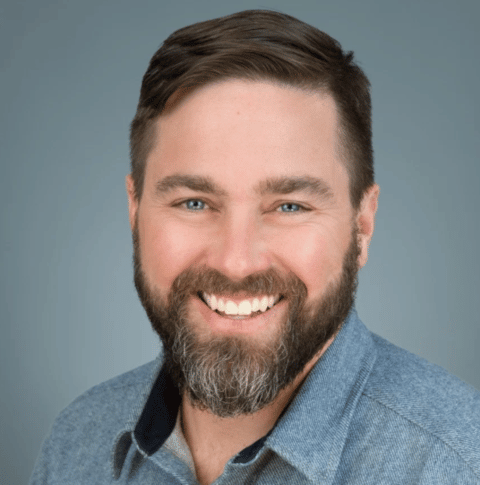
A few weeks ago, Dale Stephens, founder of UnCollege.org joined us at Udacity for lunch. We had a great conversation that really reinforced the broad spectrum of options out there for learning and doing. Dale paraphrased it quite well when he said:
“There’s a bell curve of how people like to learn. At one end is unschooling, at the far end is the traditional system we currently have. And there’s a big opening in the middle where hopefully, one day, people can learn what they want and how they want.”
We asked a lot of questions and made Dale do most of the talking (since he had so many interesting things to say)! As I’ve reflected on the conversation, some key takeaways have crystalized for me that are highly relevant for Udacians:
- The lines between formal learning, personal interests, and career are blurring.
- There are tons of options for learning, from Udacity MOOCs to teaching yourself from self-created syllabi and used textbooks. Find what works best for you.
- Learn about what you’re interested in; it will help you be a lifelong learner.
- Be confident and curious!
Here’s a more detailed summary of our Q&A:
U: What are some trends you see on the education-employment spectrum?
DS: “I think apprenticeships will become an increasingly important element of the education-to-employment trajectory. Like at Groupon, where they use an apprenticeship program in which cohorts are recruited and trained into prospective roles at the company — and potentially hired as full time employees. It proved to be highly effective from a recruiting standpoint because they could basically build their own developers. I can see a real movement toward apprentice-like programs like this.
I also think there’s an opportunity for a really great portfolio site making the bridge from learning and doing to employment. No one has really nailed this. That’s how I got started and there’s real potential in portfolios.”
U: Where do you see MOOCs fitting in to the unschooling movement?
DS: “For one, it makes information much more available. When I first started unschooling, I would go to a used textbook warehouse to find the content I needed. With MOOCs, you don’t have to go to a used textbook warehouse anymore. A lot of the information you need is at your fingertips.”
U: What are some of the most important elements of unschooling or any type of self-directed learning?
DS: “A critical component of self-driven learning is community. There are some really great communities out there, like hackerspaces.org, Noisebridge … I think Dev Bootcamp has done a great job of creating community and leveraging that for positive learning outcomes. Instead of strictly focusing on writing code, they really invest in community — everything from yoga to accountability structures. That community is invaluable to helping people learn what they want to.”
U: Can you talk about how you stay motivated, or advice you might give unschoolers to maintain motivation towards their learning goals?
DS: “Well, there’s always SMART goals. When I was just starting as an unschooler, above my desk, I had a list of all the courses I was working on. I had syllabi outlining what I was going to learn, and every week I would list all the things I needed to get done each day in order to meet those learning goals. I kept learning journals; daily records of my goals and progress. I also found accountability buddies who I’d check in with on a weekly basis.
But its important to remember that motivation is not really the defining factor. It is really the two things that go into motivation: Curiosity and Confidence. It’s much easier to teach these things and help people learn how to be curious and confident than it is to teach ‘motivation’.”
U: How do you see the education landscape continuing to evolve?
DS: “I think of education being broken down into 4 categories: Content, Community, Network, and Signaling. Content is where we’ve made the most progress thanks to MOOCs and other forms of open content. Signaling is where we have the furthest to go. There is a lot of exciting growth around communities and networks, but a lot of opportunity as well. As far as signaling, I see promise in apprenticeships and portfolios, as I mentioned. Ultimately, we are heading towards a world where people are free to make choices about educating themselves without facing judgment or negative consequences.”
We certainly have enjoyed getting to know Dale and look forward to staying in touch with him. If you want to read more about what Dale has to say, he’s got a book coming out in March and has lots of good stuff posted at UnCollege.org. Thanks, Dale, for helping us reflect on the variety of learning options out there, and all the different reasons (and ways) people learn new things!