Last Updated on November 20, 2025
I have a deep love for learning! What can I say? Through my Udacity journey as a student and mentor, I have been constantly inspired to move on a path of Digital Transformation from embracing new insights, using the latest tools, or applying the most recent trends to share knowledge and inspire innovation.
Digital Transformation goes beyond just tools and trends. It is a constant process of integrating technology into all areas of our lives, from how we communicate, work, learn, create, and tell stories. At Udacity, we embrace these processes as the strategic use of digital technologies across all areas of an organization and professional growth to transform performance, enhance business operations, and achieve results-driven outcomes that bring value to customers, teams, and those around us. It has become essential for businesses and individuals to remain competitive through better decision-making and meet evolving standards and opportunities. Its importance has leveraged collaboration, streamlined processes, and embraced innovations like Artificial Intelligence. In this blog, I explore the role of visual storytelling and AI as a key element in Digital Transformation that can support the creative process without replacing our human touch. Through a personal project, I’ll share how technology and creativity can work together to shape meaningful and memorable narratives.
As a lifelong Udacity student, I have retained this grounding concept as a catalyst for creativity, growth, and creation by setting into practice, learning from my peers, and ultimately starting a podcast with a Udacity mentor who shares the same vested interest in improvement and the commitment to make an impact, whether that means elevating a task at work or think creatively to deliver a session.
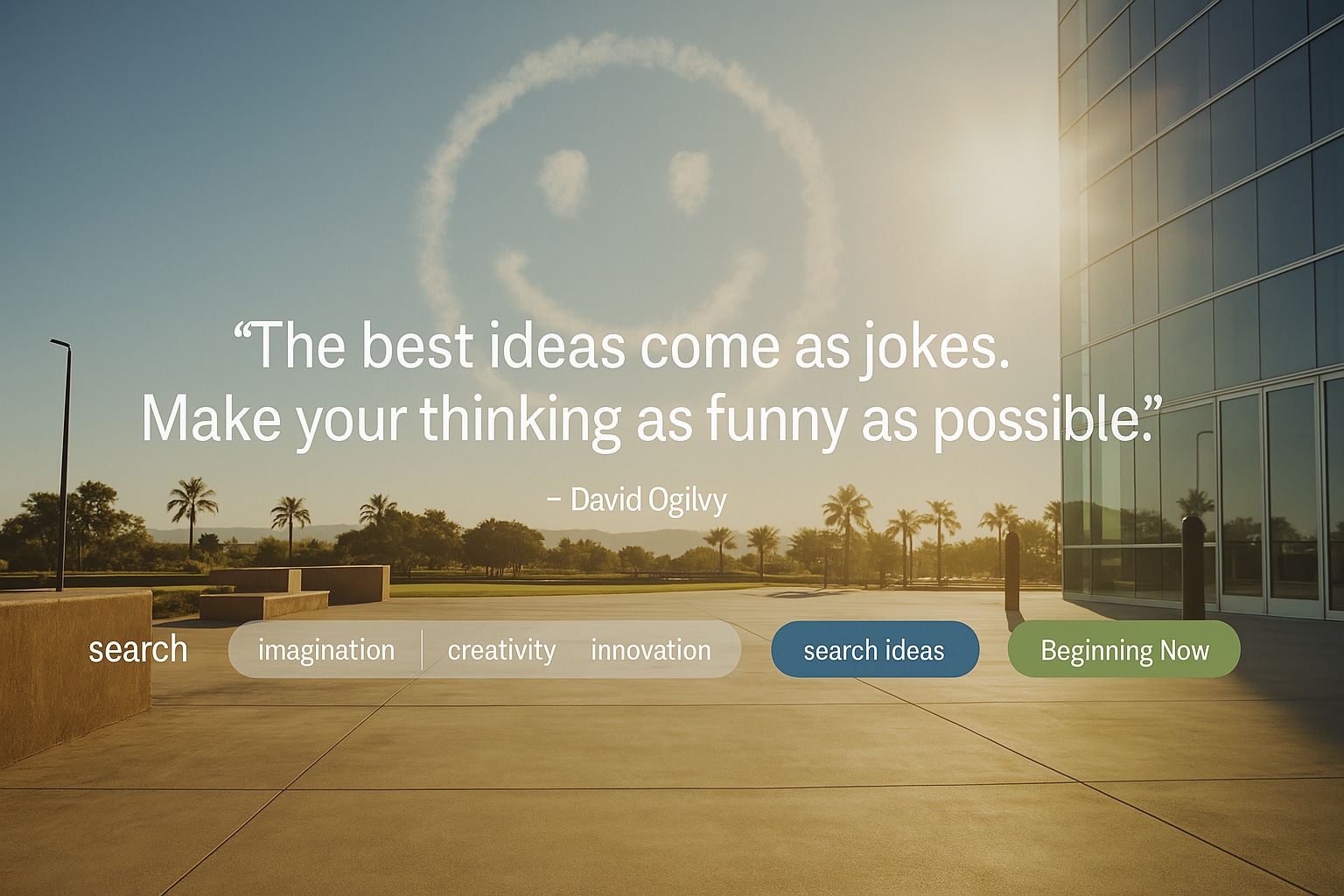
The true power of transformation lies in the irreplaceable ability to think creatively, strengthen your skills, and join new movements in technology. David Ogilvy who was a legendary businessman and a pioneer in advertising once said “The best ideas come as jokes. Make your thinking as funny as possible.” This is a reminder that creativity isn’t just about being serious. It’s about being memorable, engaging, and sometimes, a bit playful. In today’s world, where Digital Transformation integrates into several aspects of our lives, it’s our human capacity to think differently, to laugh, and to create messages that set us apart.
Your creativity leads in an era of AI integration. AI can enhance but not imitate the human touch, which is becoming more vital in creating unique and memorable brand stories that engage and inspire audiences.
With the current buzz of AI accomplishing tasks, elevating processes, and potentially shifting roles, the fundamental truth is that we cannot avoid it but instead embrace this new era of Digital Transformation where narratives are at the core of the digital landscape through visuals, storytelling, and human interaction. The key is knowing when to use AI to support our ideas. The question is not whether AI tools can create or deliver messages but whether we can position ourselves and work with AI as storytellers and creators to enhance our narratives while keeping the human touch intact.
To achieve a balance between our creativity and AI capacity requires exploration and immersion in different projects, challenges, and activities that foster innovation. This journey became evident when I explored a pixilation animation to support a business writing webinar where the message and authentic creativity are at the core. Later, I want to share with you a short animation that illustrates my artistic expression and the power of AI after I break down the thoughtful steps that make this project possible for you to see and enjoy.
A pixilation animation is a stop motion that brings human movement into each frame, making it an art form that thrives on intention, visuals, and compelling storytelling. The traditional method of this type of storytelling demanded extensive effort. It began with creating sketches meticulously crafted by hand, refining a storyboard to visualize the narrative and manual execution of each scene into a final polished version. It’s good news that we live in an era where we get help from technology! To make my writing session more impactful, I worked on a pixilation introduction designed to convey that human purpose and understanding the creative process are the bedrock in our digital era.
The Blueprint of My Story
First and foremost, the foundation of this project involved crafting the storyboard including visuals, scripts, and actions. The process also explored how AI could be integrated using prompts and working with other tools like theplot.io and Midjourney. This approach aligns with my Product Management background where storyboarding is important for understanding customer interactions. More importantly, by combining my experience and AI capabilities, I outlined scenes and built a storyboard in a fraction of the time it would have taken previously. The AI and other tools assisted in the process however the core focus remained on the storytelling itself. I focused more on the creative process by refining the vision, ideas, and emotional impact, which are fundamentally creative and human. This experience highlights that AI is not a replacement but a tool that helps us empower our creative potential. Essentially, this is the spirit of Digital Transformation.
Following a brainstorming session, the next step involved developing scenes, scripts and actions to bring the storyboard to life. I provided a concept inspired by a deeply personal and professional collection of ideas. This included a vast array of memories like a sequence my classmates and I explored in photography class featuring transitions of rolling in bed, opening the drapes, and getting ready for the day, alongside my interpretation of a popular song from college that personally evokes the feeling that embracing the day and believing in yourself can transform one’s experience. It also drew upon the aesthetics, my time playing chess in the park with friends, and my passion for Digital Arts that would contribute to the overall narrative. As you can understand, this is not a fleeting idea as it is a compilation of several influences. The storytelling emerges from personal experiences, academic learnings in Product Management, my engagement with Digital Arts, cherished memories, and popular past trends. This unique mix of memories with purpose sets the narrative apart by maintaining a level of originality that AI cannot match. This groundwork captures the essence of technological advancement and a genuine spark of innovation.
The next step was the development of a prompt designed to facilitate personalization across different creative projects. Through trial and error, I experimented with instructions by adjusting phrasing and structure to identify the most coherent and engaging results. Ultimately, I refined the prompt to align with the task and allowed the AI to assist in the project without compromising my creative vision. Please see below.
“Create a [number]-scene storyboard for a [project type] that effectively conveys [key theme or message]. Structure each scene with a clear beginning, middle, and end, ensuring a strong visual and emotional impact. Define the main [character/product/message] and how it interacts with [audience] and [challenge/opportunity]. Use [specific visual or storytelling techniques] to enhance engagement and clarity. Outline the sequence of events in a way that flows naturally, leading to a final resolution that reinforces [desired outcome or message]. If applicable, incorporate [tools, customer insights, or data] to refine the concept. Specify the script (what appears visually) and actions (how elements move or transition) for each scene to ensure a structured and dynamic narrative. Here is the initial idea: [insert your idea or core concept].”
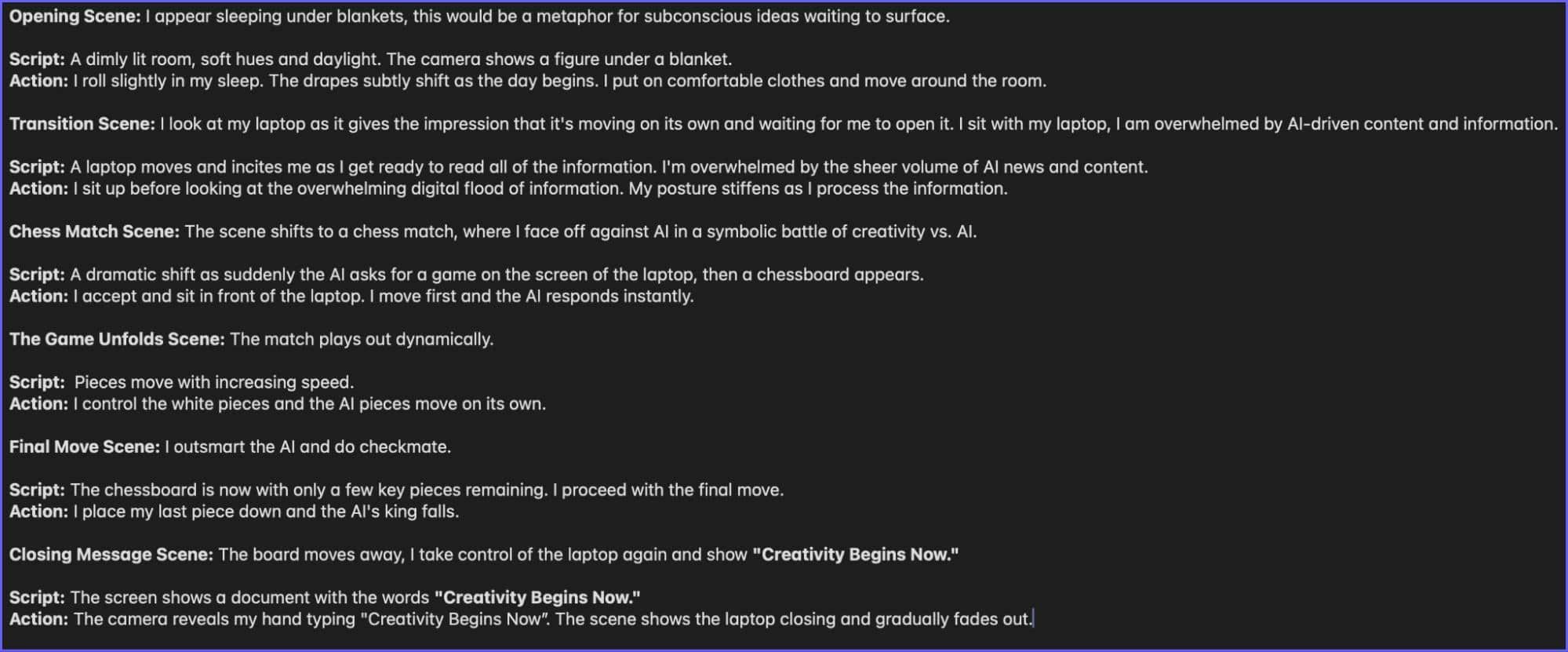
For the pixilation, my conceptualization focused on a symbolic chess match between AI and human creativity (me), showcasing how our strategic thinking ultimately wins over automated answers. The AI played a role in structuring the scenes, scripts, and actions, but my creative process carefully guided the vision and impact.
The AI provided these scenes after I edited the elements, narrative, and sequences. This is a brief example of the storyboard.
Please keep in mind that while these images can be artistic and detailed, their priority in this project is to illustrate quickly and guide the direction using Midjourney. Therefore, my images are not meant to be perfect as these intend to provide purpose and strengthen the project’s vision. Some examples and parameters to depict my scenes in Midjourney include the following prompts:
“/imagine prompt: An illustrative scene of a cozy bedroom that features personal items with vibrant colors and soft hues of daylight filtering through drapes. A figure in a sleeping pose under a blanket is depicted in a clean illustration style. –v 5 –ar 1:1 –q 2 –style vibrant, modern illustration”
“/imagine prompt: An illustrative scene with a chessboard suddenly appeared before a laptop. The laptop challenges a game. The setting is intense and focused, portrayed in a modern, clean, illustrative style with vivid colors. –v 5 –ar 1:1 –q 2 –style vibrant, modern illustration”
I’ve demonstrated a creative process for a one-minute-long pixilation that already holds significant meaning and is shaped by brainstorming, professional experiences, and tools.
This short storyboard is an example and helped guide the direction for approximately 395 photographs. Important fun fact: Please note that in a pixilation, each movement is captured as a single photograph. To better understand the process, please take a look at the storyboard.
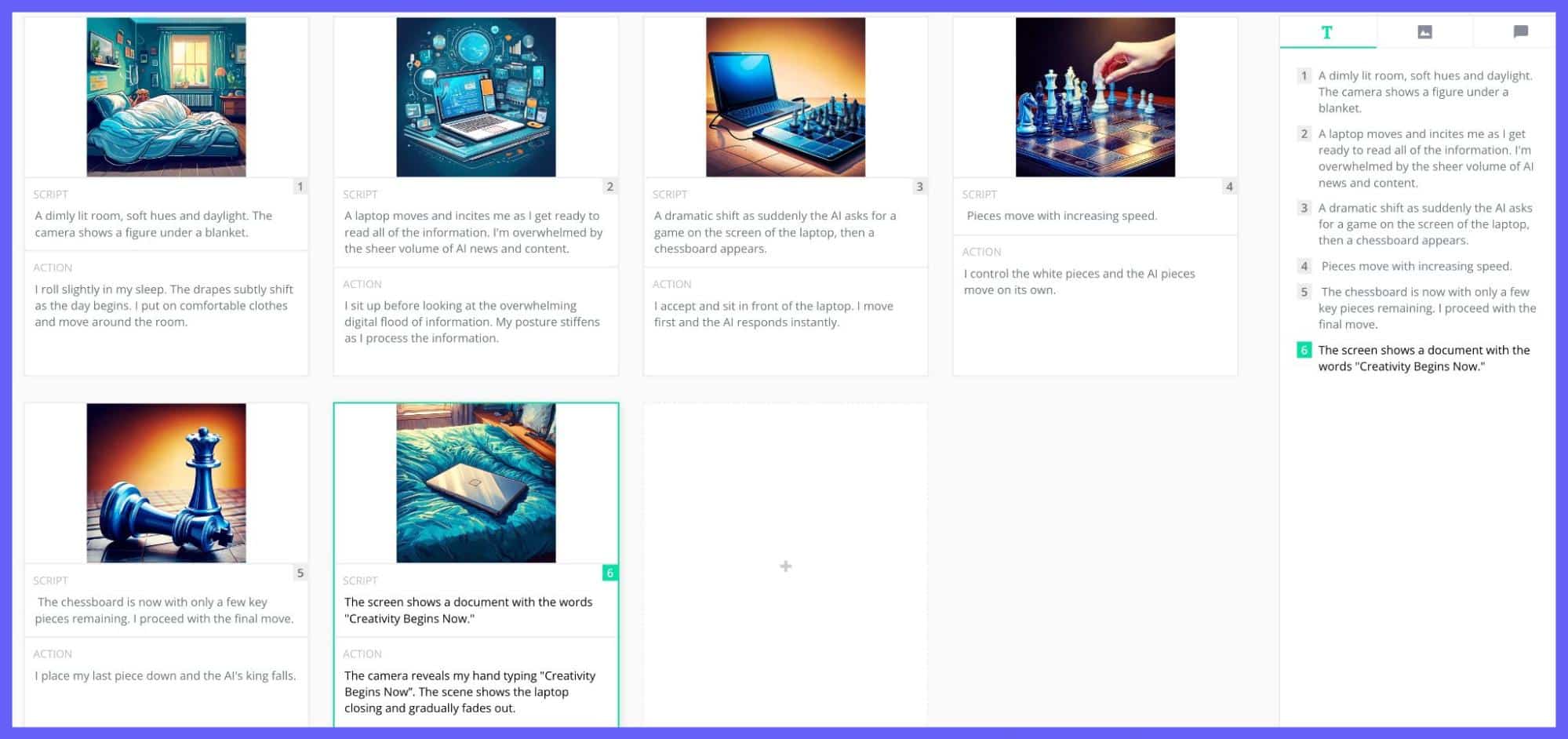
Visual storytelling is not about showing images. It must also evoke emotions, build connections, and resonate with an audience.
Let’s consider that no matter how advanced AI becomes, it won’t be able to go through a creative process that cohesively interacts with personal and professional experiences, emotions, memories, and artistic intent. While AI can generate visuals, structure scenes, scripts, actions, and suggest targeting an audience, it cannot feel. And in storytelling, feeling is everything.
The Pixilation Animation
My pixilation animation is proof that this project’s movement, transition and decision was crafted through thought, experience, and vision. I understand that AI can execute ideas in seconds, however my project required time with storytelling, framing, and over 395 photographs. Each frame was a technical step and a creative choice shaped by brainstorming, professional insights, and hands-on execution. AI assisted with aspects like storyboarding, but the story’s essence, direction, emotion, and narratives were uniquely human and perhaps imperfect. Nonetheless, this is real work based on intention and not casualty. This outline clearly demonstrates why brands like Apple, Google, and Coca-Cola thrive on creative storytelling that resonates and connects emotionally and culturally.
Please enjoy this quick pixilation animation. All rights to the song “Breathe” belong to Télépopmusik and their respective copyright holders.
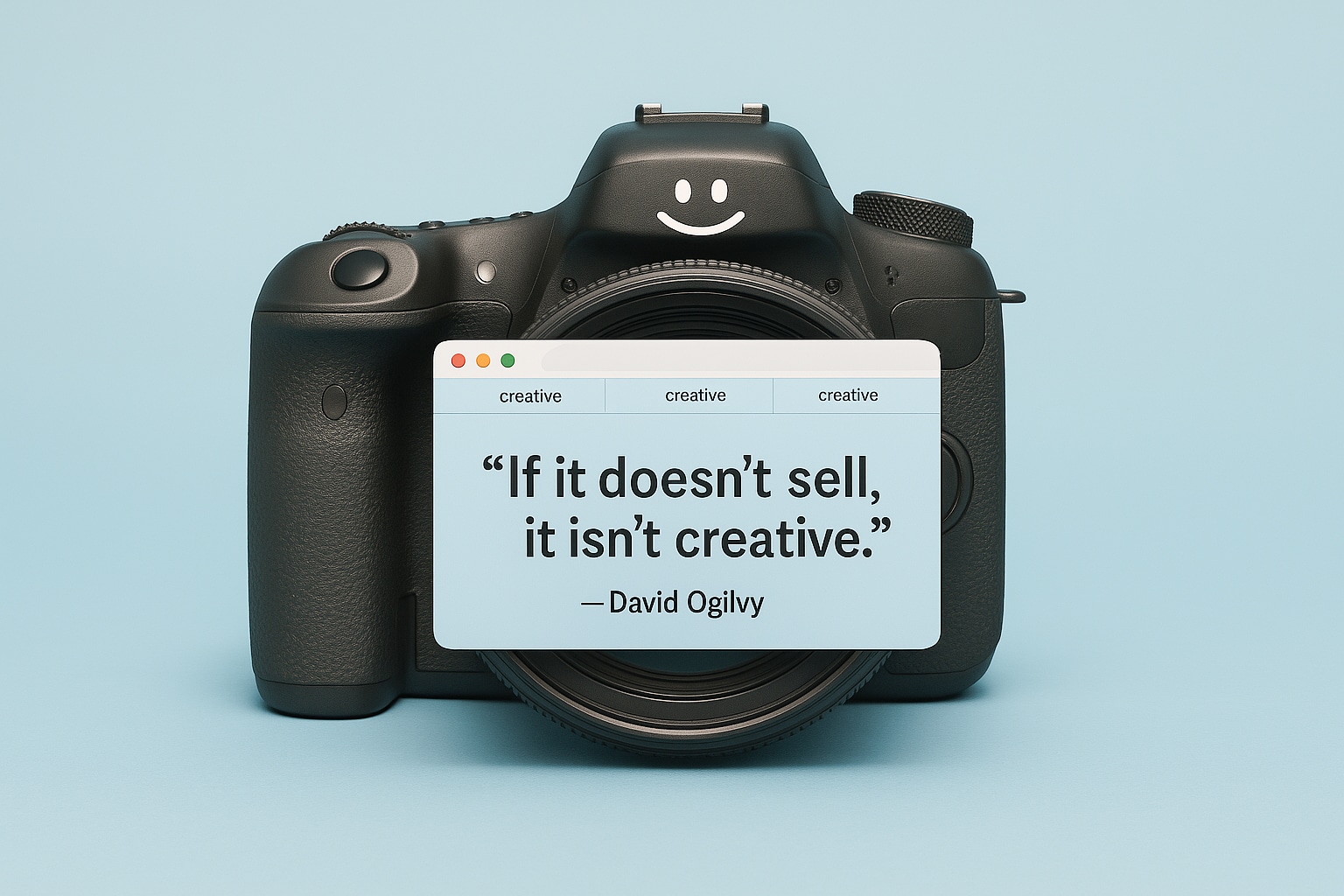
I want to leave you with another favorite quote by David Ogilvy who once said “If it doesn’t sell, it isn’t creative.” The meaning is not about selling products but a truth about storytelling itself because if a story doesn’t engage, resonate, or leave an impact, it is not effective.
So, how do we adapt to the Digital Transformation and AI era while preserving what makes us uniquely human? We continue to strengthen our love for learning and immerse ourselves in how to use AI as a tool, not as a replacement. The key is understanding where AI can enhance the creative process while ensuring that the essence of our stories remains true to our voice, perspective, and imagination.
Finally, you can browse Udacity’s Digital Arts Foundations, Digital Arts & AI Tools Fluency, and Product Management Nanodegrees to learn more about creative processes, image generation, and how to strategically use storyboarding and AI to elevate your projects and ideas.