Udacity part of Accenture logo

Deep Learning vs Machine Learning: What's the Real Difference?

Artificial Intelligence (AI) is transforming industries, but not all AI is the same. This guide breaks down the differences between machine learning (ML) and deep learning (DL), key concepts, use cases, and career opportunities.

What is Deep Learning (DL)?

Deep Learning (DL)(opens in a new tab) is a subset of Machine Learning (ML) that relies on deep neural networks to process large, unstructured datasets. Unlike traditional ML, which often needs manual feature selection, deep learning algorithms learn patterns and features directly from raw data.

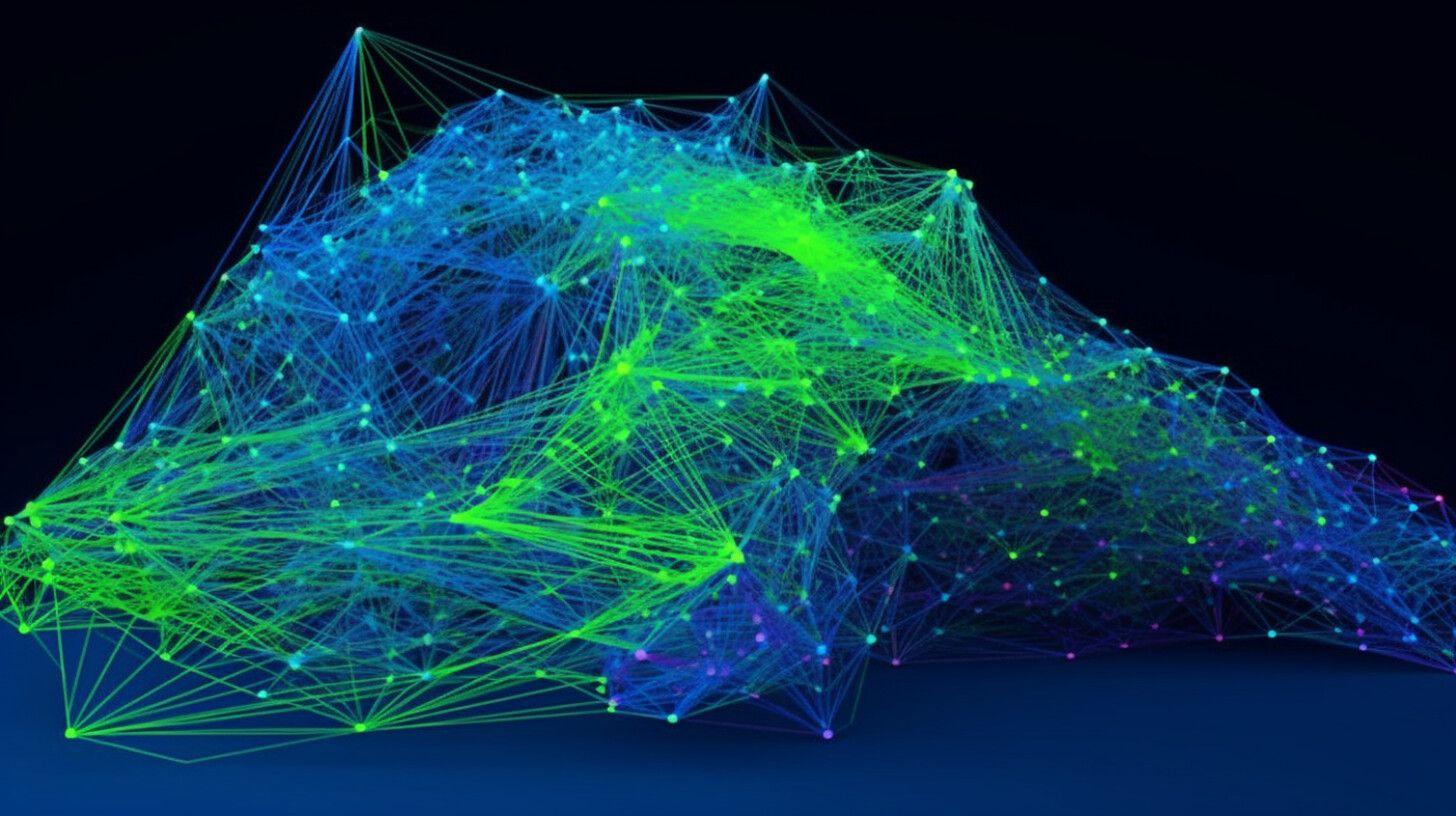
A neural network is a system of layers made up of nodes, or “neurons,” that process and transform inputs to produce outputs. These networks are inspired by the human brain and are especially powerful for tasks like image classification, speech recognition, and natural language processing. Here are the key components of neural networks:

Neurons

Neurons are the fundamental units of a neural network. Each neuron receives input, applies a weighted calculation, adds a bias, and passes the result through an activation function to produce output.

Layers

Neural networks consist of input layers (which receive data), hidden layers (which process and extract features), and output layers (which generate predictions). Adding more hidden layers enables deeper learning and helps the network learn increasingly complex relationships in the data.

Weights and Biases

Weights define the strength of the connections between neurons, while biases shift the output to improve learning flexibility. These values are adjusted during training to minimize error.

Activation Functions

Activation functions introduce non-linearity to the model, enabling it to capture complex patterns. Common functions include ReLU, Sigmoid, and Tanh, each shaping how signals flow through the network.

Some Real Life Examples of DL include:

AlphaGo

Developed by DeepMind, AlphaGo used deep reinforcement learning to master the board game Go—a complex strategy game known for its vast number of possible moves and reliance on intuition. AlphaGo trained by playing millions of simulated games against itself, gradually learning advanced tactics to defeat top human champions.

Image Recognition

Deep learning algorithms(opens in a new tab), particularly convolutional neural networks (CNNs), are used to identify faces, objects, and scenes in photos. They're key to self-driving cars and medical imaging.

Speech Recognition

Siri and Google Assistant use deep learning to convert speech into text. Recurrent Neural Networks (RNNs) are designed to process sequences like spoken language by remembering what was said earlier in a sentence. They work alongside newer models like Transformers to improve accuracy and context.

Example of DL in Use

Self-driving cars from companies like Tesla use deep learning algorithms to interpret real-time data from cameras and sensors. Neural networks detect pedestrians, read traffic signs, and make split-second driving decisions to navigate safely.


What is Machine Learning (ML) and the Four Types?

Machine Learning (ML)(opens in a new tab) is a subset of artificial intelligence that enables systems to automatically learn from data and improve over time without being explicitly programmed. Understanding machine learning fundamentals(opens in a new tab) is key to grasping how it powers many everyday technologies, from spam filtering to personalized recommendations. By using statistical models, ML can detect patterns and make data-driven decisions across a wide range of industries.

Practical applications include email spam filtering, predictive maintenance, and product recommendations on platforms like Amazon. Some commonly used ML algorithms include Linear and Logistic Regression, Decision Trees, Support Vector Machines (SVM), Random Forests, K-Means Clustering, and Gradient Boosting models such as XGBoost.

Machine learning can be categorized into four main types:

Supervised Learning

Supervised learning trains a model on labeled data, where each input is paired with a known output, to predict outcomes or classify data. It's commonly used in applications like email spam detection, medical diagnosis tools, and image recognition. Algorithms such as Logistic Regression, SVM, and Random Forests are often applied in these scenarios.

Unsupervised Learning

Unsupervised learning works with unlabeled data to uncover hidden patterns, groupings, or structures that aren’t immediately obvious. It’s useful for tasks like customer segmentation in marketing or anomaly detection in cybersecurity. Popular algorithms for this approach include K-Means Clustering and Principal Component Analysis (PCA).

Reinforcement Learning

In reinforcement learning, an agent learns to make decisions by interacting with its environment, receiving rewards or penalties based on its actions. This trial-and-error method is used in training autonomous systems like game-playing AIs (such as AlphaGo), robotics, and self-driving cars. Core algorithms include Q-learning and Deep Q-networks (DQN).

Semi-Supervised Learning

Semi-supervised learning bridges the gap between supervised and unsupervised approaches by using a small amount of labeled data alongside a large volume of unlabeled data to improve model performance. It’s especially useful in cases like image recognition with limited annotations or large-scale text classification. Algorithms here are often modified versions of standard supervised models adapted for semi-supervised tasks.

Example of ML in Action

Streaming platforms like Netflix rely on sophisticated machine learning algorithms to tailor what you see. These systems analyze user interactions—such as viewing history, ratings, and browsing behavior—to identify patterns and surface content that aligns with your tastes. Over time, they continuously learn, fine-tuning suggestions to offer a dynamic and personalized experience for each user.

What are the Differences Between Deep Learning and Machine Learning?

Machine Learning (ML) and Deep Learning (DL) are both subfields of Artificial Intelligence, but they differ in complexity, data requirements, and learning methods.

ML models typically work with structured data and rely on feature engineering, where humans decide which data attributes the model should analyze. These models use algorithms such as decision trees, support vector machines, and logistic regression. They perform well on tasks like fraud detection, email filtering, and predictive analytics using moderate-sized datasets.

Deep Learning is a specialized branch of ML that uses artificial neural networks with multiple layers to automatically learn features from unstructured data, such as images, audio, and text. Unlike traditional ML, DL does not require manual feature selection. It identifies patterns directly from raw input, making it well suited for complex problems like facial recognition, language translation, and self-driving vehicles.

DL often requires larger datasets and more computational power to be effective. It is also less interpretable than ML, which can make its decision-making process more difficult to understand. In general, ML is preferred for structured, explainable tasks, while DL is ideal for high-dimensional, complex data.

What are the Main Applications for ML and DL?

ML and DL power a wide range of technologies across industries, from healthcare and finance to entertainment and transportation. Here are some of their most impactful applications:

  • Image Recognition and Computer Vision (DL): Powers facial recognition, object detection, and medical imaging by analyzing patterns in visual data.

  • Natural Language Processing (ML & DL): Enables chatbots, translation tools, and sentiment analysis by processing and understanding human language.

  • Speech Recognition and Audio Processing (DL): Converts spoken language into text and identifies speakers, used in assistants like Siri and Alexa.

  • Predictive Analytics (ML): Forecasts outcomes such as sales trends or customer churn by learning from historical data.

  • Recommendation Systems (ML & DL): Suggest products or content on platforms like Netflix and Amazon based on user behavior and preferences.

  • Autonomous Vehicles and Robotics (DL): Supports self-driving cars and drones through real-time visual input and decision-making.

  • Fraud Detection and Cybersecurity (ML): Identifies suspicious behavior in banking or online systems by detecting anomalies in data.

  • Healthcare and Medical Diagnosis (ML & DL): Assists in disease detection and treatment planning through analysis of medical records and imaging.

  • Financial Modeling and Algorithmic Trading (ML): Predicts market trends and automates trading decisions using financial data patterns.

  • Industrial Automation and Predictive Maintenance (ML): Prevents equipment failure and improves efficiency by monitoring machine performance.

Which One Should I Prioritize?

If you’re new to artificial intelligence, it’s best to start with ML before tackling DL. ML teaches you essential concepts like data preprocessing, model evaluation, and supervised learning, which are foundational for understanding more complex DL systems. Its algorithms are simpler, easier to interpret, and require less computing power. Deep learning is best once you're ready to explore advanced topics like neural networks, computer vision, or natural language processing. Begin with ML to build core skills, then transition to DL for more specialized applications and larger-scale challenges.

What Career Opportunities Do ML and DL Present?

Here are some of the most in-demand career paths that leverage machine learning and deep learning skills across industries:

  • Machine Learning Engineer: Designs and deploys ML models for tasks like fraud detection, recommendation systems, and predictive analytics. Requires strong coding and model evaluation skills.

  • Data Scientist: Analyzes large datasets to uncover insights, build predictive models, and support business decisions using ML techniques and statistical methods.

  • AI/ML Researcher: Explores new machine learning methods, typically in academic or R&D settings, to advance the field and develop novel algorithms.

  • NLP Engineer: Applies ML to language-based tasks such as chatbot development, machine translation, and sentiment analysis.

  • Business Intelligence Developer: Incorporates ML insights into dashboards and reporting tools to guide strategic business planning and improve data-driven decisions.

  • Deep Learning Engineer: Specializes in building and optimizing neural networks for applications like computer vision, speech recognition, and natural language understanding.

  • Computer Vision Engineer: Uses deep learning models to develop systems for facial recognition, object tracking, and autonomous navigation.

  • Speech and Audio Processing Engineer: Builds DL-powered tools for speech-to-text transcription, voice assistants, and audio classification.

  • Robotics Engineer: Implements DL for real-time perception and decision-making in autonomous machines, drones, or industrial robots.

  • AI Software Engineer: Combines deep learning expertise with full-stack development to build production-ready AI systems.

  • AI Product Manager: Bridges the gap between technical teams and business goals by guiding the development of AI-powered products.

  • MLOps Engineer: Focuses on the deployment, monitoring, and scaling of ML models in production environments.

  • Ethical AI Specialist: Ensures that AI systems are fair, transparent, and aligned with ethical standards across industries.

  • AI Consultant: Advises companies on how to apply ML and DL technologies to solve problems and drive innovation.

The Future of ML and DL: Why You Should Learn Now?

The demand for ML and DL expertise is expanding as more industries adopt AI to drive innovation, efficiency, and personalization. From healthcare and finance to retail, cybersecurity, and autonomous systems, ML and DL are powering the future of technology. Gaining these skills now not only future-proofs your career but also opens doors to high-impact roles in development, data science, and AI research. Whether your goal is to build intelligent tools, automate decision-making, or solve real-world challenges, mastering these technologies is

Check Out Our School of Artificial Intelligence

Explore the School of Artificial Intelligence at Udacity to master in-demand skills in machine learning, deep learning, NLP, and more. Discover expert-led courses designed to launch your AI career across tech, healthcare, finance, and beyond.

Browse School

Essential Courses For Learning DL and ML

Introduction to Machine Learning with Pytorch

Learn to build powerful models in this Machine Learning Nanodegree with PyTorch. Master supervised, unsupervised, and deep learning techniques through projects involving customer segmentation and image classification.

View Course

Deep Reinforcement Learning

From foundational concepts to advanced algorithms, this Nanodegree equips you with the tools to build intelligent agents using Python, neural networks, and state-of-the-art RL frameworks across robotics, finance, and beyond.

View Course

Unsupervised Learning

Learn to apply unsupervised learning methods like K-means and Gaussian mixtures to extract value from raw data. Develop skills in feature extraction and cluster validation to enhance data analysis.

View Course

Supervised Learning

From theory to application, this course guides you through supervised learning essentials. Learn to select, implement, and refine models that solve complex classification and regression tasks.

View Course

Developing your First ML Workflow

Step into the world of ML engineering with interactive AWS projects. Train models, deploy endpoints, and automate workflows using SageMaker, Lambda, and Step Functions to deliver efficient machine learning applications.

View Course

Constructing and Training Neural Networks

This course covers foundational deep learning theory and practice. We begin with how to think about deep learning and when it is the right tool to use. The course covers the fundamental algorithms of deep learning, deep learning architecture and goals, and interweaves the theory with implementation in PyTorch.

View Course

Intro to Deep Learning with PyTorch

Learn the basics of deep learning, and build your own deep neural networks using PyTorch, an open source machine learning library used for applications such as NLP and Computer Vision.

View Course

Advanced Computer Vision and Deep Learning

Explore cutting-edge computer vision techniques. This course teaches CNNs, RNNs, and attention mechanisms to help you build advanced applications like automatic image captioning with real-world datasets.

View Course

Machine Learning DevOps Engineer

Gain end-to-end expertise in Machine Learning DevOps with this Nanodegree program that focuses on deployment, automation, and monitoring. Develop production-ready skills in CI/CD, container orchestration, and model performance tracking.

View Course

Introduction to Machine Learning with TensorFlow

Build powerful machine learning models to predict outcomes and uncover insights using data. This Nanodegree covers foundational supervised learning techniques like linear regression, decision trees, Naive Bayes, SVMs, and perceptrons.

View Course

AWS Machine Learning Engineer Nanodegree

Refine your machine learning skills with this AWS Machine Learning Engineer Nanodegree. Learn to deploy models on SageMaker and design automated workflows with AWS Lambda and Step Functions.

View Course

Browse the Full School Library

Explore all of Udacity’s Schools, consisting of hundreds of career-driven programs and courses that are designed to teach practical skills and help you learn to your full potential.

Browse Schools

Program FAQs

Udacity Accenture logo

Company

  • Facebook
  • Twitter
  • LinkedIn
  • Instagram

© 2011-2026 Udacity, Inc. "Nanodegree" is a registered trademark of Udacity. © 2011-2026 Udacity, Inc.
We use cookies and other data collection technologies to provide the best experience for our customers.