
Brian Cruz
Head of AI Engineering, Advocate
This Nanodegree program equips you with the skills to design, build, and deploy autonomous AI agents. Unlike standard LLM courses that focus on text generation, this program focuses on Agentic AI—enabling AI to perceive, reason, plan, and act. Leveraging the Microsoft Azure AI ecosystem, you will learn to implement robust prompting strategies, design agentic workflows, integrate external tools using Microsoft Semantic Kernel, and orchestrate multi-agent systems that collaborate to achieve complex goals within Microsoft Foundry.
Subscription · Monthly
56 skills
6 prerequisites
Prior to enrolling, you should have the following knowledge:
You will also need to be able to communicate fluently and professionally in written and spoken English.
Go beyond simple prompts and learn to design robust, Azure-native AI agents. In this course, you’ll use Microsoft Foundry and the Agent Service to build role-based agents that reason, plan, and act with real-world tools and data. You’ll master advanced prompting techniques—including Chain-of-Thought, ReAct, and systematic prompt refinement—to turn raw model capabilities into reliable, controllable behavior. You'll chain agents into multi-step workflows, adding validation gates and feedback loops so agents can inspect, correct, and improve their outputs. Through focused, hands-on labs, you’ll apply these patterns to a realistic supply chain scenario, culminating in a multi-tool agent that can analyze data, call utilities, and support complex operational decisions end to end.
12 hoursIntroduces the core concepts of Agentic AI, the course structure, prerequisites, and learning environment.
Learn what AI Agents are and how they work. Understand the critical role prompting plays in guiding them to reason, plan, and act to achieve goals.
Explains the theory of using roles or personas to control the tone, style, and expertise of an LLM's output.
Explore how to implement role-based prompting in Azure Agent Service, including configuration, best practices, and use cases for tailored conversational AI experiences.
Explains the conceptual frameworks for Chain-of-Thought (CoT) for guided reasoning and ReAct (Reason+Act) for enabling agents to plan and take actions.
Explore how to implement Chain-of-Thought (COT) and ReACT prompting in Azure AI Foundry Agent Service.
Explains the theory of systematically refining prompt instructions by modifying components like Role, Task, Context, Examples, and Output Format.
Explore how to refine prompt instructions using Azure AI Foundry Agent Service for effective AI-driven solutions.
Explains the conceptual framework for building multi-step AI workflows by linking the output of one prompt to the input of the next, and the importance of validation.
Explore how to create and chain prompts using the Azure AI Foundry Agent Service to build dynamic, multi-step conversational AI workflows.
Explains the conceptual framework for building self-improving systems where an agent uses feedback from its own actions to iteratively refine its output.
Explore how to implement and manage feedback loops in LLM applications using Azure Foundry AI Agent Service for model improvement and reliability.
Build a multi-agent supply chain workflow in Microsoft AI Foundry that generates BOMs, checks inventory, analyzes suppliers, and creates purchase orders, validated through resources and test runs.
This course offers a comprehensive exploration of advanced workflow implementations using Azure's capabilities. Beginning with foundational concepts, you will learn about practical applications such as implementing agentic workflows using the Semantic Kernel, utilizing prompt chaining for enhanced interactions, and applying routing workflows for efficient task management. Additional focus will be on parallelization techniques with Python, as well as developing evaluator-optimizer workflows to refine results. Finally, you will learn about the orchestrator-workers pattern for seamless workflow coordination and leverage AgentQuant for insightful data analysis.
15 hoursDiscover the basics of agentic workflows with Azure, using Python and the Semantic Kernel SDK to build adaptive AI systems powered by large language models.
Explores what defines a modern AI agent, its core components (Persona, Knowledge, Tools, Interaction), and the different types of agents based on their LLM interaction model.
Design and visualize agentic workflows. Learn common agent types as building blocks for creating visual workflow diagrams.
Learn to implement a multi-agent workflow in Semantic Kernel, creating specialized agents to efficiently route and answer customer inquiries by domain expertise.
Introduces the Prompt Chaining pattern for breaking down complex tasks into a sequence of smaller, dependent steps. It covers strategies for task decomposition, validation, and context management.
Learn to solve complex problems by chaining specialized AI agents in sequence using Semantic Kernel, plugins, and prompt workflows to build comprehensive solutions in Python.
Teaches the Routing pattern, which involves classifying incoming tasks and directing them to the most appropriate specialized agent or processing path.
Learn to build multi-agent AI workflows with orchestrators in Semantic Kernel, intelligently routing tasks to specialized agents for scalable, robust automation.
Introduces the Parallelization pattern for executing multiple agent tasks concurrently. It covers strategies for task decomposition (sharding, aspect-based) and result aggregation.
Learn to speed up data analysis by building a multi-agent Python workflow with Semantic Kernel, using asyncio and ConcurrentOrchestration for parallel agent execution.
Focuses on the Evaluator-Optimizer pattern, an iterative process of generation, critique, and refinement to improve output quality. It emphasizes clear evaluation criteria and actionable feedback.
Learn to automate iterative content refinement using agentic creator-critic workflows with Semantic Kernel, orchestrating agents for high-quality, reliable AI-generated outputs.
Introduces the advanced Orchestrator-Workers pattern, where a central agent dynamically plans, delegates, and synthesizes the work of multiple specialized worker agents.
Learn to implement the agentic orchestrator-workers pattern in Semantic Kernel, enabling multiple AI agents to plan, delegate tasks, and collaborate for complex problem solving.
AI-driven workflow that cleans, analyzes, visualizes CSV data, and generates reports using asynchronous Semantic Kernel agents with human-in-the-loop validation and dynamic Python code execution.
This course explores the intricacies of constructing AI agents utilizing Microsoft Azure. You will embark on a journey through the fundamentals of agent design before mastering tools that extend agent capabilities. Key focus areas include the implementation of structured outputs with Pydantic, state management, and memory systems, both short- and long-term. The curriculum emphasizes integration with external tools and databases, particularly through Cosmos DB and Bing Search to enhance functionality. Additionally, you will explore evaluation techniques for agents. By the end of the course, you will build a sophisticated AI travel concierge agent, contextualizing their learning in a hands-on project.
15 hoursGet to know your course instructors, set up OpenAI resources, and get an overview of the course.
Extend AI agents beyond text with tool integrations, enabling reliable real-time actions and data access.
Learn to empower AI agents in Python by building and registering custom tools with Semantic Kernel, allowing access to real-time external data and enhanced functionality.
Discover structured outputs in AI: transform responses into actionable JSON for integration. Utilize schemas, parsers, and function calls to enhance reliability and automation in workflows.
Learn to compel LLMs to output structured, validated JSON by combining Pydantic models, structured prompts, and Semantic Kernel's automatic tool invocation.
Explore agent state management with state machines. Learn how agents track user input, instructions, and tool use for complex workflows, ensuring adaptability and reliability.
Learn to build robust AI agents using a Python finite state machine to define phases, manage agent state, guide LLMs, and ensure predictable, auditable multi-step workflows.
Explore short-term memory in AI agents, enhancing coherence via state, ephemeral, and ephemeral memory strategies for efficient context retention in active sessions.
Learn to add short-term memory to an agent using Python, enabling it to track conversation history, manage memory limits, and handle follow-up questions in dialogues.
Explore using external APIs for real-time data, dynamic actions, and authenticating agents. Discover MCP, a protocol standardizing AI’s tool interoperability and safety.
Learn to enhance LLMs with real-time data using Semantic Kernel, integrating external APIs as plugins, automatic tool selection, and maintaining conversation context for expert agents.
Equip agents to search web for real-time, unstructured info. Ground responses in evidence using APIs, handle noise, and avoid hallucination for credible answers.
Build AI agents with real-time Bing web search using Semantic Kernel, Azure AI Agents, prompt engineering for JSON, and auto tool selection in Python.
Equip agents to access and modify structured data by using SQL for interaction and vector databases for semantic tasks, ensuring seamless integration with private systems.
Learn to build AI agents with Retrieval-Augmented Generation using Azure Cosmos DB, including data ingestion, text-based retrieval, and robust agent integration.
Discover Agentic RAG: Enhance RAG by enabling reflection, query reformulation, and intelligent adaption for nuanced answers. Master retrieval, reasoning, and retry loops.
Build agentic RAG with Cosmos DB: create a self-correcting AI agent that refines queries, uses LLMs to assess document quality, and leverages hybrid search with RRF for better answers.
Explore long-term agent memory: understand semantic, episodic, and procedural memories. Learn storage strategies and best practices for personalized, coherent interactions.
Learn to build AI agents in Python with long-term memory, enabling them to recall past interactions for context-aware, personalized conversations using memory storage and retrieval.
Agent Evaluation guides assessing an agent’s task completion, quality, tool use, and system metrics using response, step, or trajectory strategies to ensure reliable and efficient operations.
Learn to evaluate AI agents by combining rule-based structural checks with LLM-as-judge semantic analysis for comprehensive quality assessment.
Build a Python-based travel concierge agent for a premium bank that uses tools, stateful orchestration, RAG, and dual memory to plan trips end-to-end and recommend the best credit card.
This course offers a comprehensive exploration of designing and implementing multi-agent architectures. Starting with an introduction to course concepts, students will learn to leverage the Semantic Kernel for effective agent architecture creation. Key lessons focus on agent orchestration, optimizing routing and data flow, and managing state within multi-agent environments. Advanced topics include orchestrating agents collaboratively and employing Retrieval Augmented Generation (RAG) to enhance data retrieval in agentic systems. The course culminates with a practical application of these concepts in the VectraBank project, showcasing agentic RAG tailored for banking applications.
15 hoursGet introduced to multi-agent systems, their real-world applications with Azure, course goals, and meet the expert instructors guiding your learning journey.
Explain the core components of multi-agent systems and how to design their high-level architecture.
Develop a multi-agent system by coding the designed architecture and connecting agents with well-defined interfaces.
Learn to build multi-agent AI systems with Semantic Kernel in Python, orchestrating specialized agents in parallel or sequence to solve complex smart city planning problems.
Apply orchestration techniques to coordinate multiple agent actions and achieve complex workflows.
Learn to orchestrate specialized AI agents with Semantic Kernel using sequential, parallel, and conditional patterns for flexible, efficient multi-agent solutions.
Configure routing mechanisms to manage data flow among agents in multi-agent systems.
Learn to build agentic systems with Semantic Kernel, using Azure SQL for persistent data, intelligent routing, and real-time, context-aware multi-agent responses.
Evaluate methods for tracking and updating agent state across multi-turn interactions.
Learn to build collaborative multi-agent AI systems with Semantic Kernel, using shared state management and plugins for real-time, coordinated agent workflows.
Develop a coordinated multi-agent system that synchronizes states for coherent task execution.
Learn to build multi-agent systems with a coordinator agent, shared state, and Semantic Kernel plugins for dynamic orchestration and workflow optimization, using a pasta factory simulation.
Extend RAG to multiple cooperating agents, each specialized in certain retrieval tasks.
Learn to build and extend a multi-agent RAG system using Semantic Kernel, integrating specialized AI agents for robust, in-depth research with error handling and report persistence.
Create a multi-agent system based on agentic RAG to handle customer queries in banking context.
7 instructors
Unlike typical professors, our instructors come from Fortune 500 and Global 2000 companies and have demonstrated leadership and expertise in their professions:

Brian Cruz
Head of AI Engineering, Advocate

James Willett
Principal Software Engineer & Tech Educator

Peter Kowalchuk
Engagement Director at C3.ai

Henrique Santana
Principal Machine Learning Engineer at Dell Technologies

James Wall
Senior ML engineer
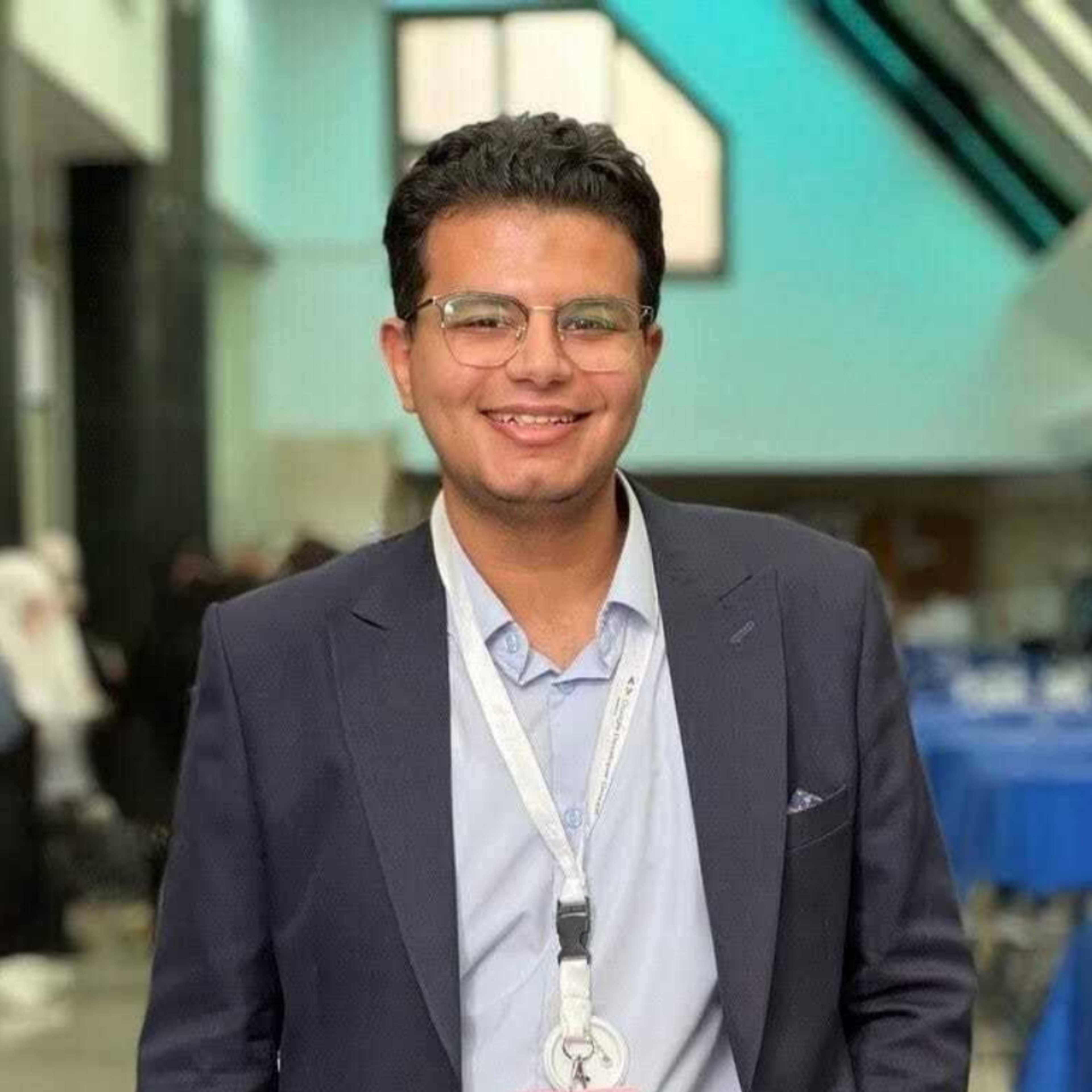
Tawadros Nemer
Applied Scientist at Microsoft
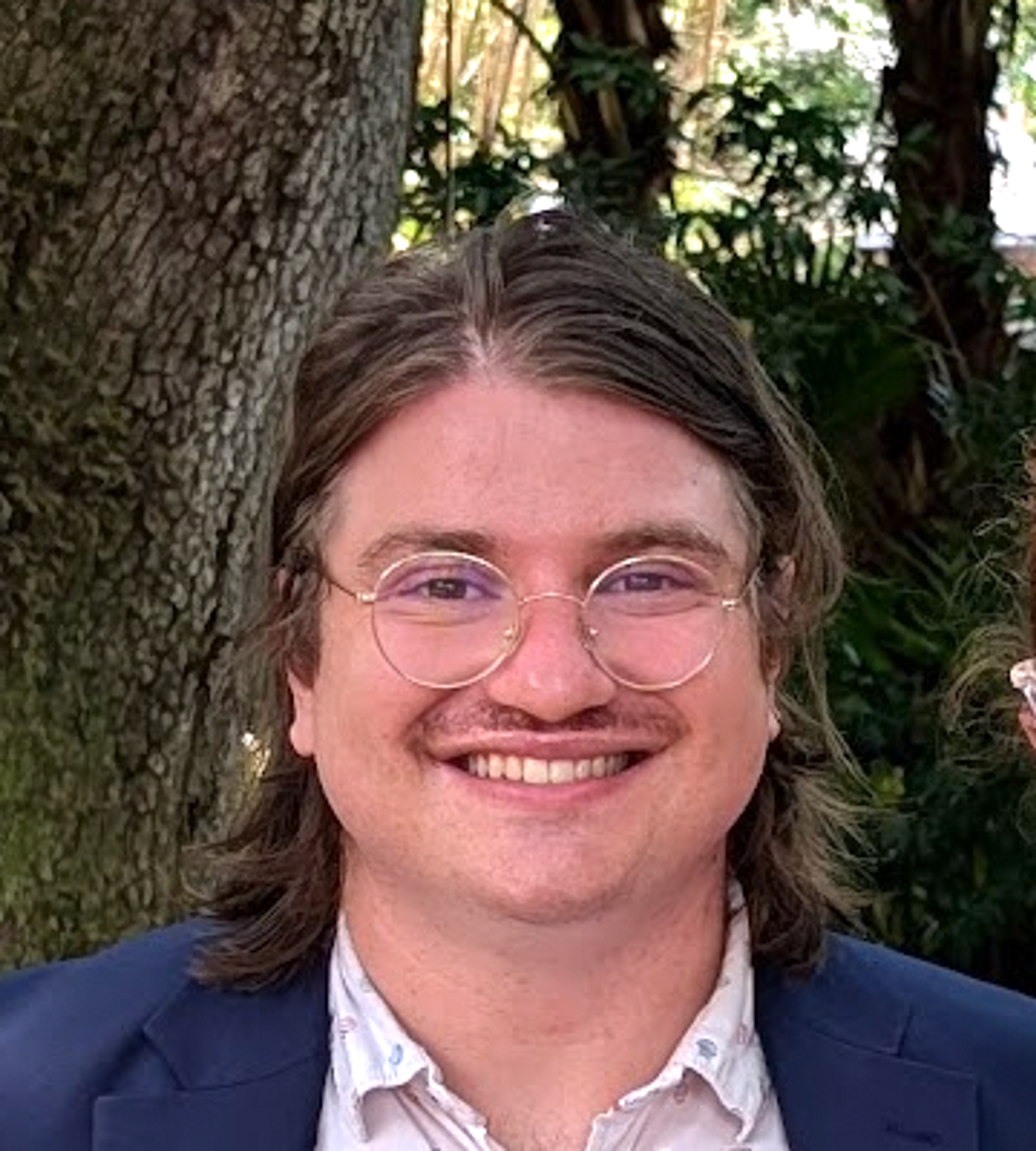
Christopher Agostino
Founder and Research Scientist at NPC Worldwide

Brian Cruz
Head of AI Engineering, Advocate

James Willett
Principal Software Engineer & Tech Educator

Peter Kowalchuk
Engagement Director at C3.ai

Henrique Santana
Principal Machine Learning Engineer at Dell Technologies

James Wall
Senior ML engineer

Tawadros Nemer
Applied Scientist at Microsoft

Christopher Agostino
Founder and Research Scientist at NPC Worldwide
Learn agentic AI on Microsoft Azure. Build tool-using agents, workflows, and multi-agent systems with Semantic Kernel and Foundry.

Subscription · Monthly